
Seamless Gutter Installation & Repair Built for Ogden Snowmelt, Ice, and Canyon Wind
Insurance-specialist gutter contractor serving Ogden and Weber County. We install seamless aluminum gutter systems sized for Wasatch Front runoff, document storm damage for your insurance claim, and give honest answers about ice dams instead of upselling guards that will not fix the real problem.
• Licensed and Insured in Utah • Local Ogden Contractor • Insurance Claim Specialists • Seamless Aluminum Systems
On this Page:
A canyon wind event tore the front gutter off a home in North Ogden last March and took a strip of fascia with it. The homeowner called three companies. Two of them quoted a simple gutter replacement. We pulled the soffit back, found rot the previous installer had painted over, documented hail dents along the back run that the homeowner had never noticed, and got the whole system covered under her storm claim. That is the difference between selling gutters and solving the actual problem.
Most contractors treat gutters as a commodity. We treat them as a water management system designed for the specific conditions Ogden homes deal with: heavy spring snowmelt, freeze-thaw cycles that separate cheap seams within a few winters, canyon wind, and ice dams along the east bench. When we handle a gutter job, we also check what the adjuster missed, what the previous crew covered up, and whether your downspouts are actually sized for your roof. That level of care is how a gutter system lasts 25 years instead of five.
What We Install
Gutter Services We Provide
From new construction installs to storm damage replacements to targeted repairs, we handle the full range of residential gutter work across Weber and Davis County.
Seamless Aluminum Installation
Custom-formed on-site in one continuous piece from corner to corner. Standard 5-inch K-style or oversized 6-inch with 3x4 downspouts for homes with heavy snowmelt loading.
Gutter Repair & Resealing
Loose hangers, leaking seams, pulled-away runs, clogged downspouts. We diagnose honestly and recommend repair over replacement when repair is the right call.
Storm Damage Replacement
Hail-dented, wind-torn, ice-damaged gutter systems. We document damage for your insurance claim and coordinate the full replacement once the claim is approved.
Downspout Installation
Custom-formed on-site in one continuous piece from corner to corner. Standard 5-inch K-style or oversized 6-inch with 3x4 downspouts for homes with heavy snowmelt loading.
Gutter Guard Installation
Loose hangers, leaking seams, pulled-away runs, clogged downspouts. We diagnose honestly and recommend repair over replacement when repair is the right call.
Fascia & Soffit Repair
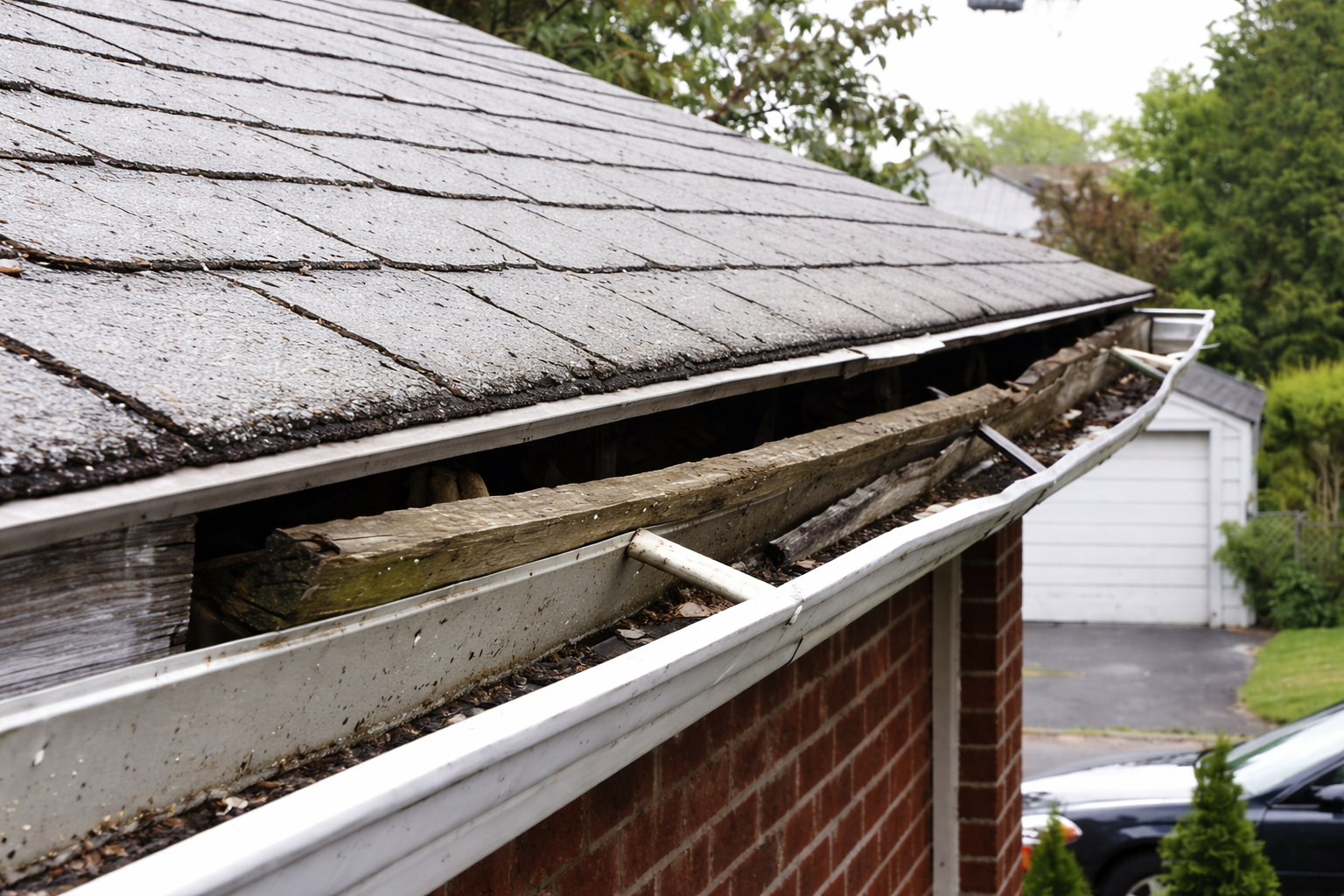
Rotted fascia often comes with failing gutters. We repair or replace damaged fascia before installing new gutters, not after a crew covers the damage up.
Local Conditions
Why Proper Gutters Matter More in Ogden Than Most Cities
Ogden sits in a drainage corridor shaped by the Wasatch Front, and our homes deal with conditions gutter systems in flatter, milder regions never face. A generic builder-grade install that holds up in Las Vegas or Phoenix will fail within a few winters here. Four specific local factors separate a gutter system that lasts from one that does not.
The first is spring snowmelt volume. When a heavy snowpack on the upper Wasatch starts melting in late March and April, the water coming off a steep Ogden roof plane moves fast. Undersized 5-inch gutters with 2x3 downspouts overflow regularly during peak runoff, spilling water onto foundations and into basements. Homes on the east bench with mountain-facing rooflines see this problem most acutely.
The second is freeze-thaw cycling. Ogden winters routinely move through the freeze line multiple times per week. Water in a sectional gutter expands at every freeze, stressing seams until they separate. Seamless aluminum eliminates most of those failure points. Proper hidden hanger spacing handles the rest.
The third is canyon wind. Weber Canyon and Ogden Canyon funnel wind events that can exceed 70 miles per hour at the mouth. Gutters secured with old-style spike-and-ferrule hangers into soft or rotted fascia do not survive those events. We use hidden hangers screwed through the fascia into solid substrate at 24-inch spacing or tighter.
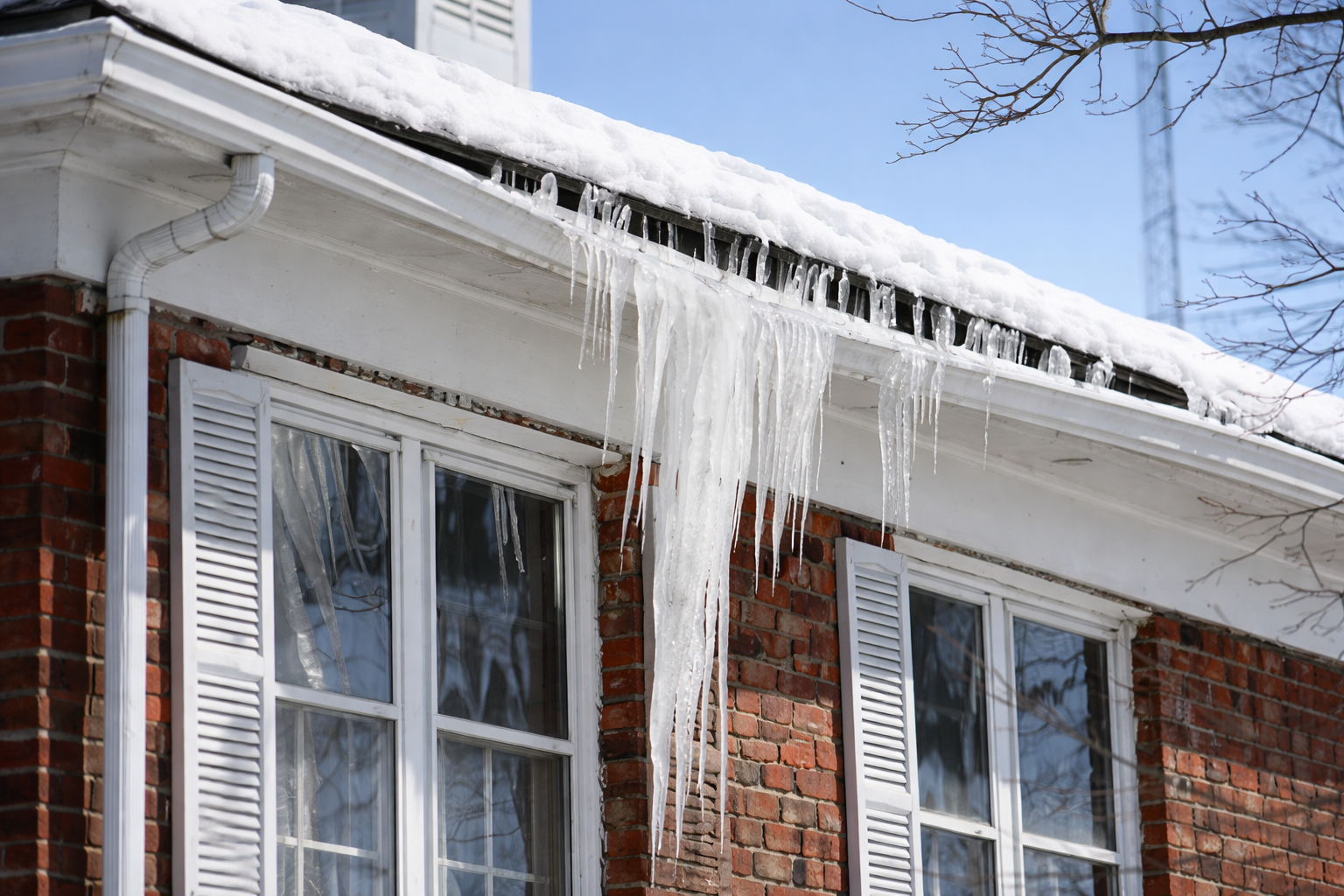
The fourth is the east-bench ice dam problem. Homes against the foothills get more snow accumulation, more attic heat loss through older insulation, and more ice dam formation along the eaves. Ice dams bend gutters, pull hangers loose, and force meltwater back under shingles. A properly sized gutter system with adequate downspout capacity is part of the solution, though not the whole answer. More on that below.
The Honest Truth
Why Most Gutter Installations Fail Prematurely in Utah
A gutter system should last 25 years or more. A lot of them in Ogden fail in five to ten. The aluminum is almost never the problem. The install is. Five specific mistakes sink cheap jobs, and every one of them is avoidable if the crew knows what they are doing and cares enough to do it right.
Wrong Pitch
Gutters need a slight slope toward the downspouts, roughly a quarter inch per ten feet. Too flat and water pools, freezes, and sags the run. Too steep and it looks wrong and still does not drain correctly. Cheap crews eyeball it.
Spike-and-Ferrule Hangers
Old-style spike hangers pull loose after a few freeze-thaw cycles and a couple of canyon wind events. Hidden hangers screwed into solid fascia are the modern standard and hold for decades.
Undersized Downspouts
Standard 2x3 downspouts cannot move the water volume a steep Ogden roof generates during spring snowmelt. The gutter fills faster than it drains and overflows repeatedly until something bends or separates.
Hanger Spacing Too Wide
The common shortcut is hangers every 36 to 48 inches. In Ogden snow load, that is a recipe for sag and separation. We space hangers at 24 inches or tighter, period.
Rotted Fascia Ignored
A crew in a hurry paints over soft fascia and screws new gutters into it. Within two winters the hangers pull out of rotted wood and the whole run comes down. We inspect and repair fascia before installation, not after. When we find rot, we also check for water damage that may have worked its way into the roof deck. See our roof leak repair page for how we handle damaged decking.
No On-Site Water Test
A proper install ends with running water through every run and downspout to verify flow and catch any seam or joint issues before the crew leaves. Most installers skip this. We do not.
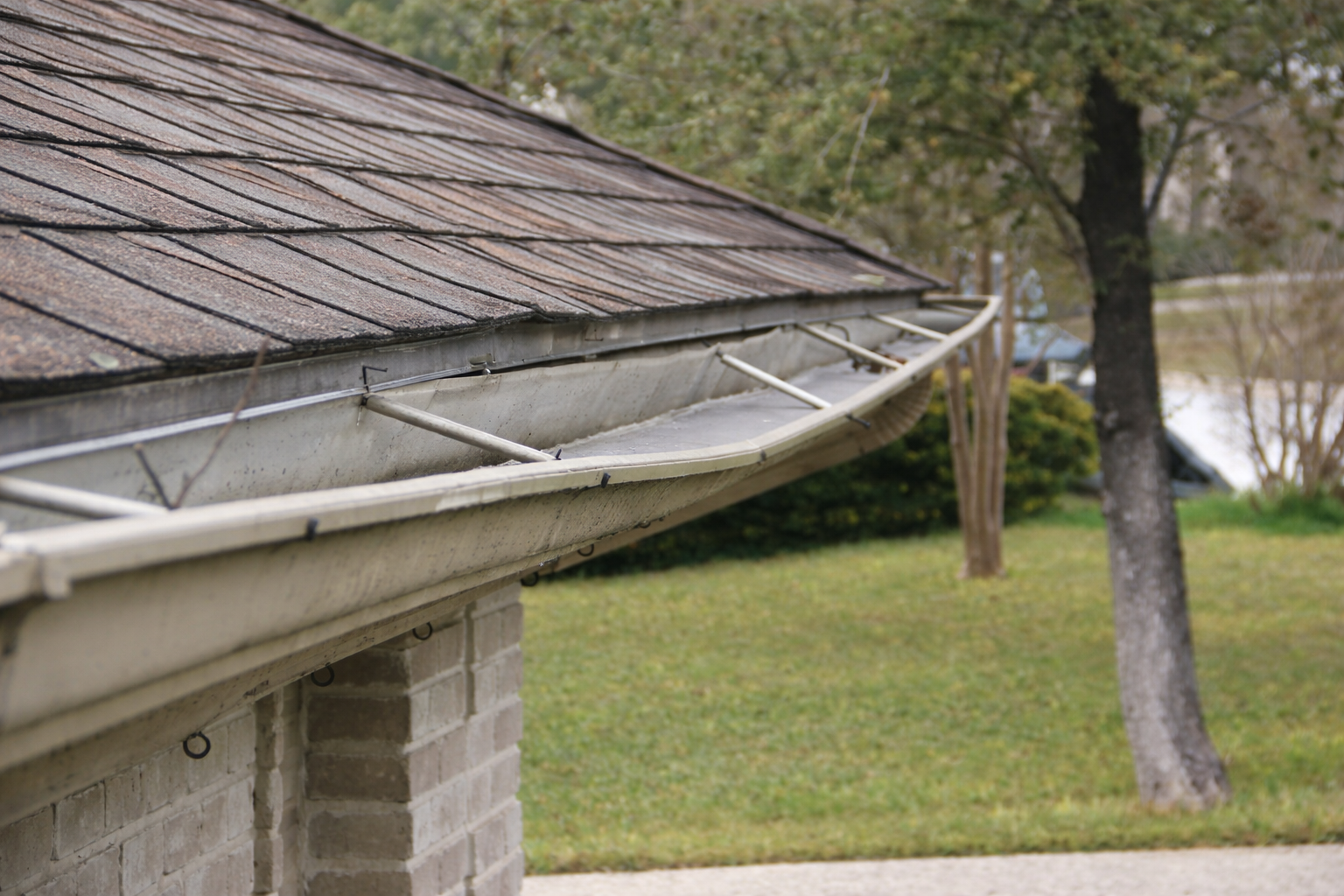
A cheap gutter install almost always costs more in the long run. You pay once for the bad install, again for the fascia rot it causes, and a third time for the correct replacement five years later. Doing it right the first time saves real money.
Know Your Options
Seamless Aluminum vs. Sectional vs. Copper: An Honest Comparison
Three main options exist for residential gutters in Ogden. The right one depends on the home. Here is how they actually compare for Wasatch Front conditions.
| Factor | Sectional Aluminum | Seamless Aluminum | Copper |
|---|---|---|---|
| Lifespan | 10-15 years | 20-30 years | 50+ years |
| Leak Points | Seam every 10 ft | Only at corners and outlets | Soldered seams, very few |
| Wind Resistance | Low (depends on hangers) | High with hidden hangers | High |
| Ice/Snow Performance | Poor, seams separate | Strong, one continuous run | Excellent |
| Upfront Cost | Lowest | Moderate | Highest (3-4x aluminum) |
| Maintenance | Frequent resealing | Low | Very low, develops patina |
| Best For | Sheds, outbuildings, short-term fixes | Primary Ogden Residences | Historical homes, architectural upgrades |
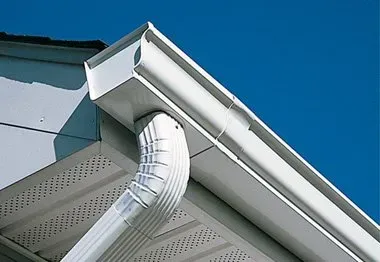
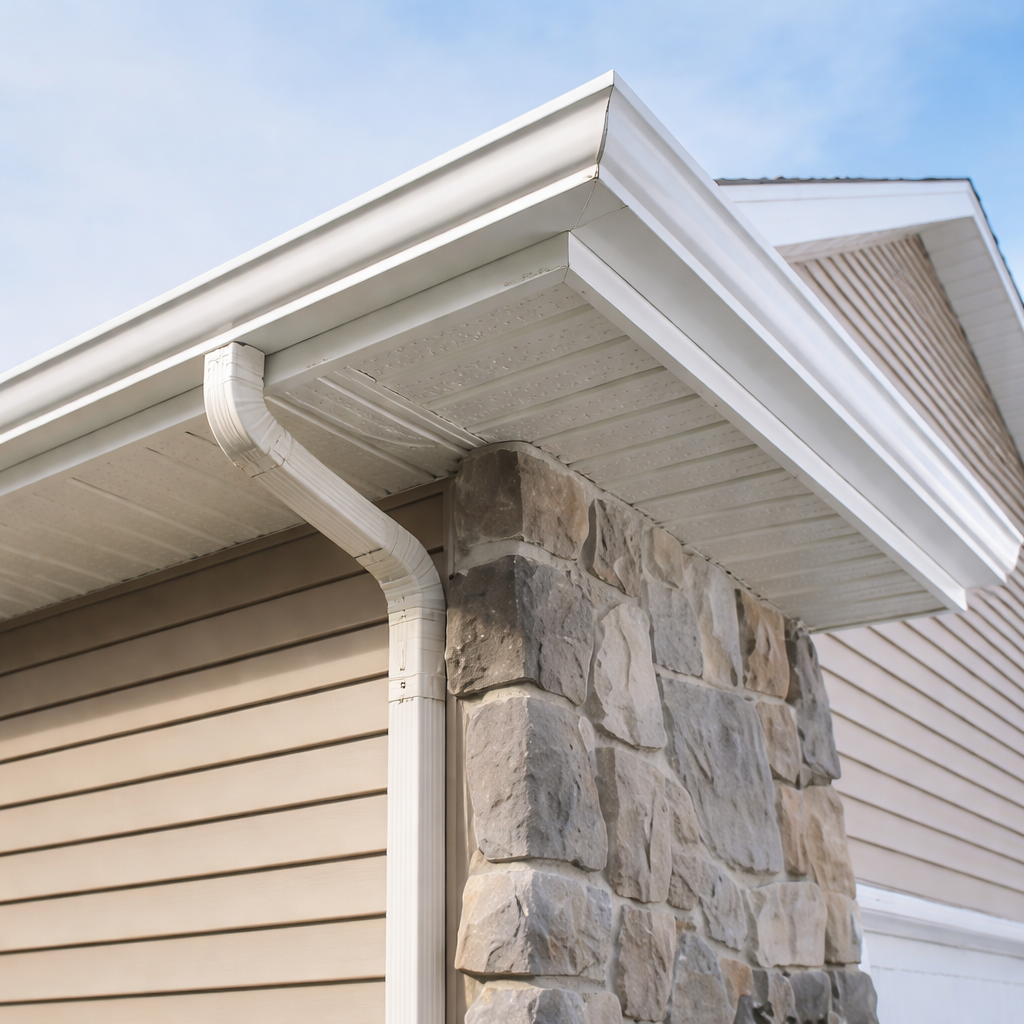
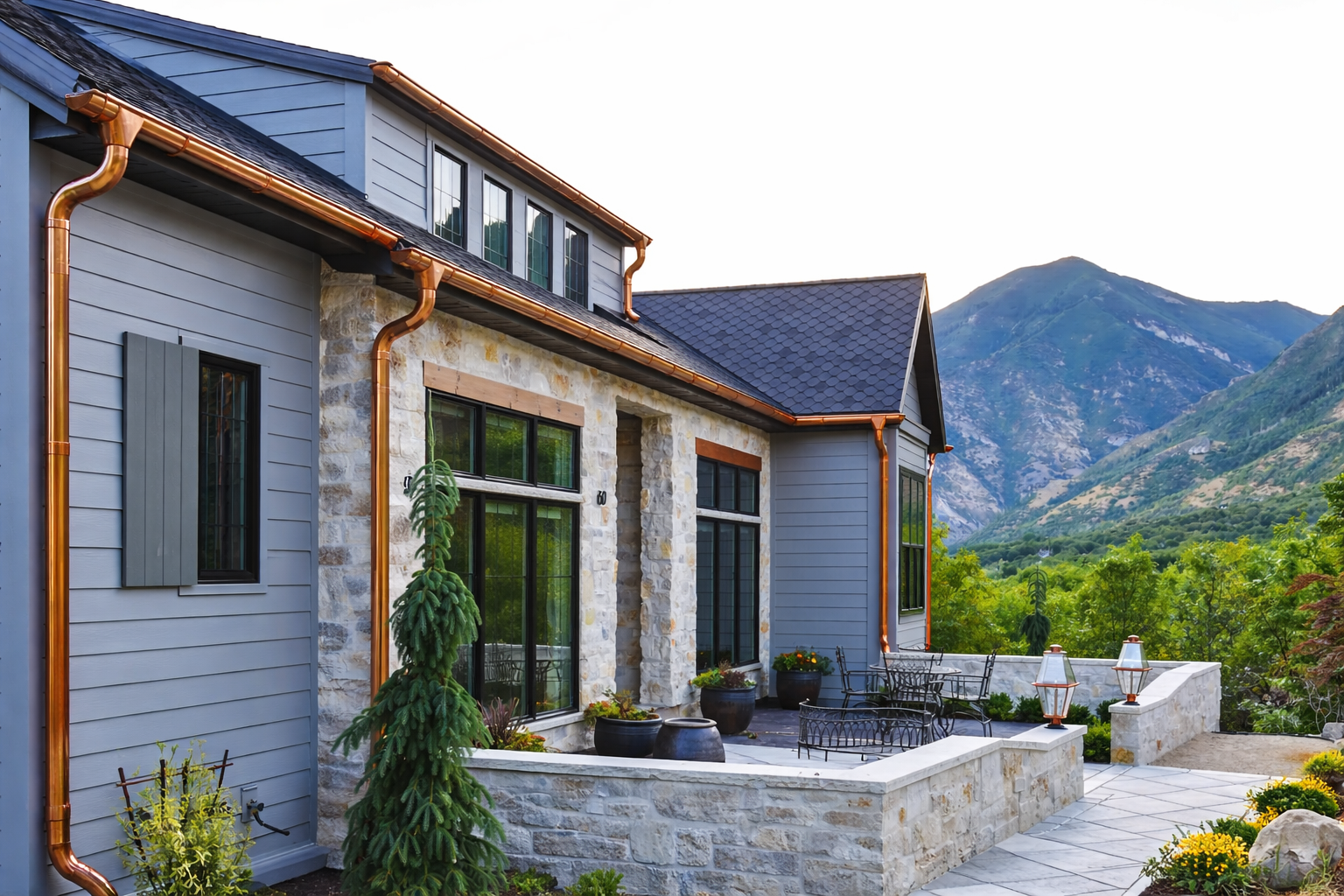
For most Ogden homeowners, seamless aluminum is the right answer. It is the best balance of lifespan, performance, and cost for Wasatch Front conditions. Sectional makes sense for a detached garage or shed where you do not need 25-year performance. Copper is a premium choice for historic homes or owners who want a generational exterior upgrade and appreciate the patina it develops over time. If you are thinking about copper, you may also want to look at our standing seam metal roofing work, since the two systems pair naturally on higher-end Ogden homes.
The 5-Inch vs 6-Inch Question
What Size Gutters Do You Need in Ogden?
This is the question most gutter companies do not answer honestly, because the honest answer is that a lot of Ogden homes need bigger gutters than the industry default. Here is how to think about it.
The Standard 5-Inch K-Style
A 5-inch K-style gutter with 2x3 downspouts is the default residential gutter in Utah and handles most single-story homes with moderate roof pitches just fine. If you have a 1,500 square foot ranch with a 4:12 pitch and average rainfall exposure, 5-inch is adequate.
When You Need 6-Inch Gutters
Upgrade to 6-inch K-style with 3x4 downspouts when any of the following apply: the home is two stories with large roof planes, the roof pitch is 6:12 or steeper, there are long uninterrupted runs of 40 feet or more, the home sits on the east bench with heavy snow exposure, or previous gutters overflowed during spring snowmelt. A 6-inch gutter holds roughly 40 percent more water than a 5-inch, and a 3x4 downspout moves nearly double the volume of a 2x3. Together they almost double total drainage capacity.
The Simple Math
Bigger roof plane plus steeper pitch equals faster water flow, which equals bigger gutters required. A steep 6:12 pitch accelerates runoff dramatically compared to a shallow 4:12. If your roof dumps water fast, your gutters need to handle it fast, or the system overflows. We calculate this during the free inspection based on measured square footage, pitch, and exposure.
Straight Talk
The Truth About Ice Dams and Gutters
Gutters do not cause ice dams. Gutter guards do not fix them.
If a gutter contractor tells you otherwise, they are either uninformed or selling you something. Ice dams are a roof and attic problem, not a gutter problem, and the solutions live mostly above the gutter line.
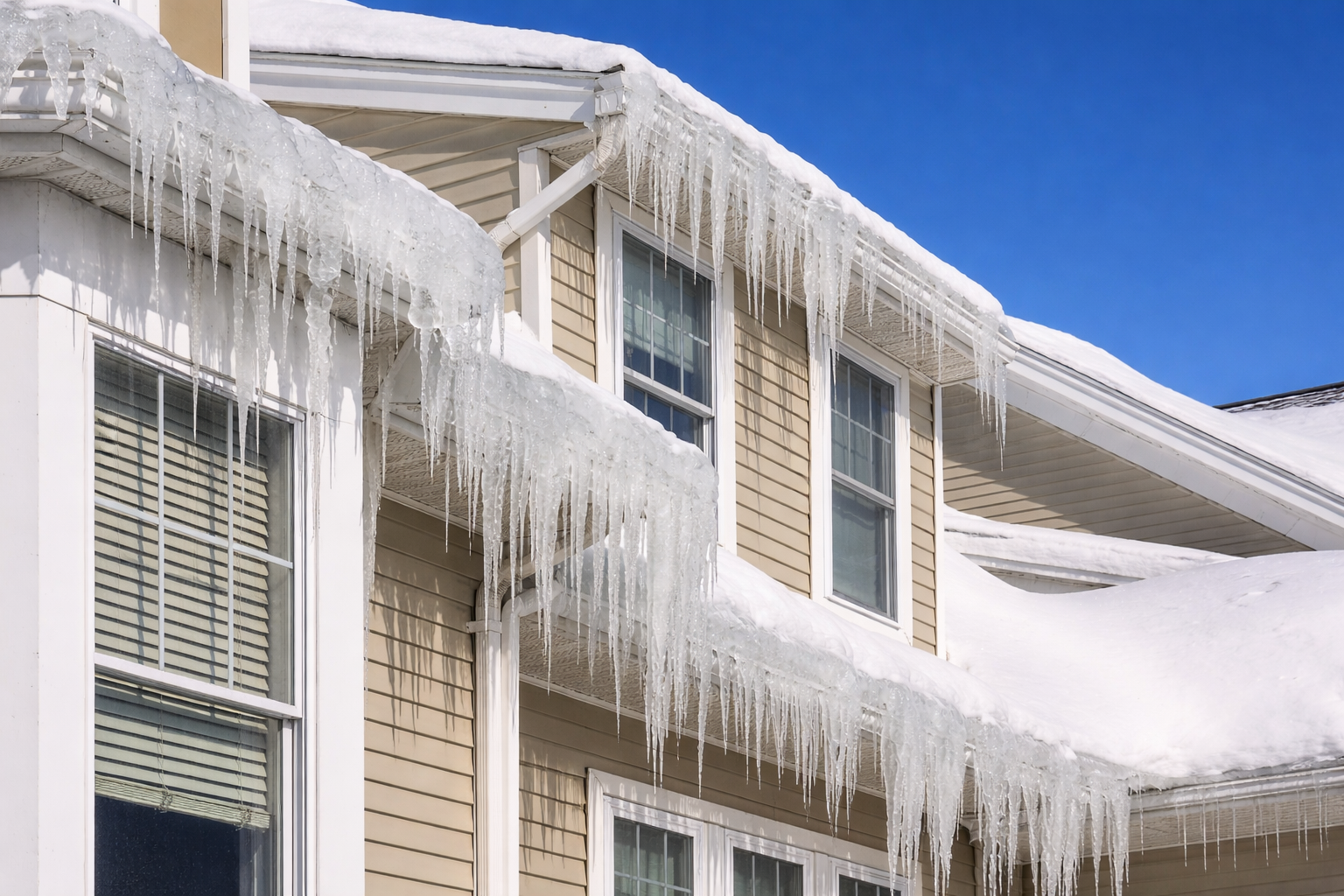
Here is what actually happens. Warm air escapes from your attic through inadequate insulation or poor ventilation. That heat warms the upper roof deck, which melts snow sitting on it. The meltwater runs down the roof until it reaches the eave, which is colder because it extends past the heated interior of the house. At the eave, the water refreezes, building up a ridge of ice that traps more meltwater behind it. That trapped water eventually backs up under the shingles and into the home.
The real fixes, in order of importance: seal attic air leaks and upgrade insulation so heat is not escaping into the roof deck in the first place; improve attic ventilation with balanced soffit and ridge vents to keep the underside of the roof deck the same temperature as the outside air; install properly sized gutters and downspouts so meltwater has somewhere to go when it does reach the eave; and in specific problem areas where the first three are not enough, install heat cable along the eave, through the gutter, and down the downspout to create a continuous melt channel.
We would rather tell you the truth and lose a gutter guard upsell than sell you a product that will not fix the problem. When we see ice dam damage during an inspection, we usually recommend starting with attic work, not gutter guards. If you need roof or attic ventilation work, our emergency roof repair team handles that directly.
Insurance Specialists
Storm Damage and Gutter Insurance Claims
Most Ogden homeowners do not realize that damaged gutters are frequently covered under the same homeowners policy that covers roof damage. When a hail event hits your roof, it also hits your gutters. When wind tears shingles off, it often tears gutters loose too. When a tree limb comes down, it crushes whatever it lands on. These are all claimable events, and they should be claimed together.
The problem is that insurance adjusters frequently miss or undervalue gutter damage. They are focused on the roof because that is the largest line item, and they may not notice hail dents along the back run of gutters or the slight separation at the fascia from a wind event. We have seen adjusters approve full roof replacements while writing the gutters off as undamaged, when the gutters were clearly impacted by the same storm.
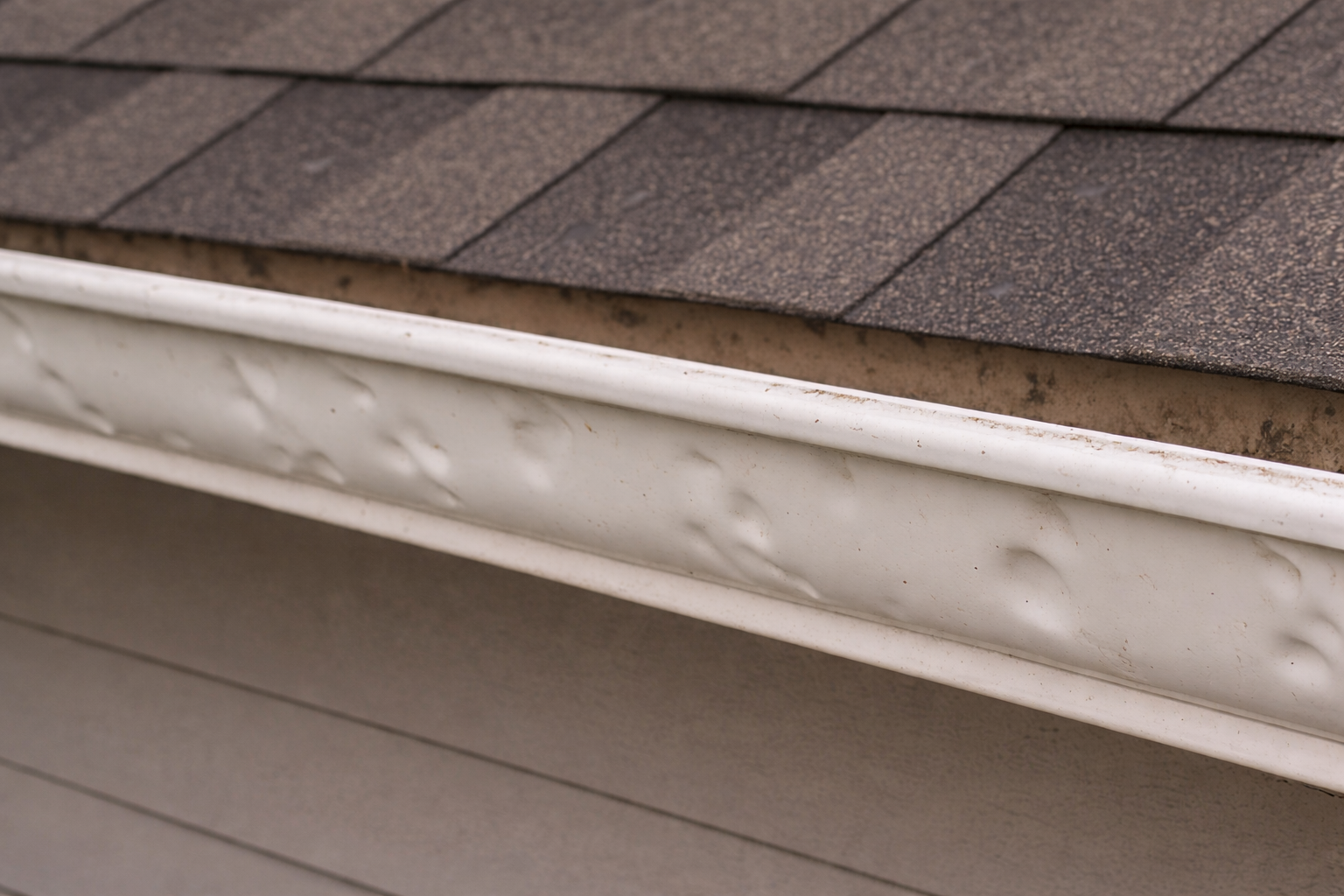
Our approach is different. When we inspect a storm-damaged home, we document the gutters the same way we document the roof: photographs of hail impact marks, measurements of wind separation, evidence of ice dam bending, and a clear report showing the damage is consistent with the storm event. We then submit that documentation to the adjuster as part of the claim. Many homeowners end up with fully covered gutter replacements because we caught what would have otherwise been missed.
If your roof was damaged in a storm and you are already working through a claim, we can document the gutter damage as part of the same inspection at no additional cost. Learn more about how we handle the full storm damage insurance claim process, or if the storm was severe enough that both systems need to go, our full roof replacement crews coordinate gutters and roofing together.
Not Sure If Your Gutters Are Storm-Damaged or Undersized?
Free on-site inspection for Ogden-area homeowners. We document any storm damage for your insurance claim at no extra cost.
How We Work
Our Gutter Installation Process
A straightforward, transparent process from first call to final water test. Most residential installs are completed in a single day.
Free On-Site Inspection
We measure the roof, check fascia condition, assess drainage patterns, and evaluate any existing damage or undersized components.
System & Color Selection
5-inch or 6-inch, downspout sizing, hanger type, color match to existing trim or fascia. We walk you through the options and give a written quote.
Storm Damage Documentation
If damage is storm-related, we photograph and document everything for your insurance claim before removing the old system.
On-Site Seamless Forming
Custom-formed continuous runs cut to exact length on our gutter machine at the job site. No pre-cut sections, no unnecessary seams.
Removal & Fascia Check
Old gutters come down, fascia is inspected and repaired where needed, and the install surface is prepped properly before anything goes back up.
Installation with Proper Pitch
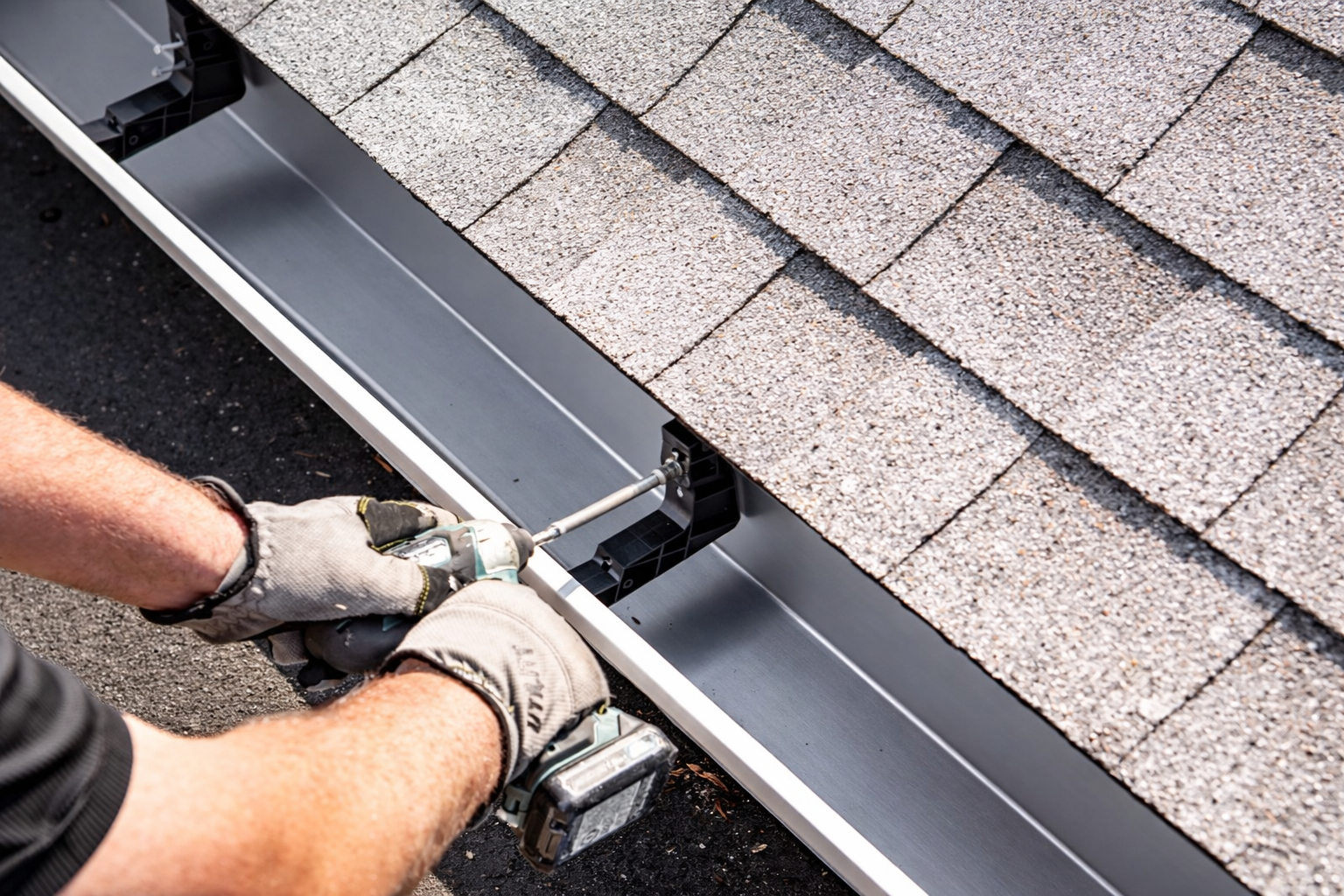
Hidden hangers at 24-inch spacing or tighter, correct pitch toward downspouts, sealed corners and outlets, downspouts placed for foundation drainage.
Final Water Flow Test
We run water through every run and downspout before leaving the site, catch any issues on the spot, and walk the system with you.
Honest Pricing
What Gutter Installation and Repair Cost in Ogden (As of 2026)
Honest market ranges for residential gutter work in Ogden and Weber County. Final pricing depends on linear footage, accessibility, fascia condition, and material choice. We give a written quote after the free inspection, with no pressure and no surprise charges.
Seamless Aluminum Installation
$8 to $15 per linear foot (typical Ogden home: $1,600 to $3,800)
Standard 5-inch K-style, hidden hangers, proper pitch, full downspout system. 6-inch oversized systems run slightly higher.
Gutter Repair & Resealing
$5 to $15 per linear foot for targeted repairs
Seam resealing, hanger replacement, pitch correction, downspout repair. Service call minimums may apply for very small jobs.
Full Replacement After Storm Damage
Often covered by homeowners insurance
When gutter damage is caused by a covered storm event, most or all of the replacement cost is typically paid by your policy. We document the damage and submit it to your adjuster at no extra cost.
Gutter Guards
$6 to $12 per linear foot installed
Quality mesh or micro-mesh systems installed on existing or new gutters. Worth it for tree-heavy lots. Not a fix for ice dams.
Heat Cable for Ice Dam Mitigation
$12 to $22 per linear foot installed
Self-regulating heat cable installed along the eave, through the gutter, and down the downspout. Used in specific problem areas where insulation and ventilation fixes are not enough.
Fascia Repair
$8 to $20 per linear foot
Removal and replacement of rotted fascia board before new gutter installation. Priced separately so you see exactly what you are paying for.
As of 2026. Prices reflect current market conditions in Ogden and Weber County and can shift with material costs. We always provide a firm written quote before any work begins.
Common Questions
Frequently Asked Questions
How long do aluminum gutters last in Utah?
A properly installed seamless aluminum gutter system in Ogden typically lasts 20 to 30 years. Lifespan depends heavily on installation quality. Proper pitch, hidden hangers spaced at 24 inches or less, and adequate downspout sizing all matter more than the aluminum itself. Cheap installs with spike-and-ferrule hangers and wide spacing often fail within 5 to 10 years in our snow loads.
Are gutter guards worth it in Ogden?
Gutter guards are useful for homes surrounded by trees, since they reduce cleaning frequency. They will not solve ice dam problems on their own. Ice dams form because of attic heat loss, not because of clogged gutters. If your primary reason for wanting guards is ice dam prevention, the real solutions are attic insulation, ventilation, and in some cases heat cable along the eave.
Will my homeowners insurance cover my damaged gutters?
Often yes, when the damage comes from a covered event like hail, wind, or a fallen tree limb. Gutter damage is frequently claimable alongside roof damage in the same storm event. Adjusters sometimes miss or undervalue gutter damage. We document hail dents, wind separation, and ice dam damage during our inspection and include it in the claim at no additional cost.
What size gutters do I need for a two-story home in Ogden?
Most two-story Ogden homes benefit from 6-inch K-style gutters with 3x4 downspouts, especially if the roof has steep pitch or large surface planes. The standard 5-inch gutter with 2x3 downspouts is adequate for smaller single-story homes but can overflow during heavy spring snowmelt or intense thunderstorms. We size gutters during the free inspection based on your actual roof area and pitch.
How often should gutters be cleaned in Ogden?
Twice a year minimum for most Ogden homes: once in late fall after the leaves drop and once in early spring before snowmelt peaks. Homes on the east bench with mature trees may need three cleanings. Neglected gutters overflow, freeze, pull away from the fascia, and accelerate ice dam formation.
Do seamless gutters really prevent leaks?
They dramatically reduce leak points. Sectional gutters have a seam every 10 feet, and each seam is a failure point that eventually separates in freeze-thaw cycles. Seamless gutters are formed on-site in one continuous piece from corner to corner, so the only joints are at corners and downspouts. For a primary residence in Ogden, seamless is the right answer.
Can you repair gutters or do they need full replacement?
It depends on the cause. Loose hangers, minor leaks, and clogged downspouts are almost always repairable. Systems with widespread sagging, extensive rust, rotted fascia behind the gutters, or hail damage across multiple runs usually need replacement. We give an honest assessment during the free inspection rather than pushing replacement when repair is the right call.
Do I need heat cables for ice dams?
Heat cables are a tool, not a cure. The root cause of ice dams is warm air escaping the attic and melting roof snow that refreezes at the eave. Fixing insulation and ventilation is the real solution. On homes where that is not feasible or where ice dams keep forming in specific problem areas, heat cable along the eave and through the gutter and downspout can prevent damage.
What is the difference between 5-inch and 6-inch gutters?
A 6-inch K-style gutter holds roughly 40 percent more water than a 5-inch. Paired with a 3x4 downspout instead of a 2x3, total drainage capacity nearly doubles. For Ogden homes with large roof planes, steep pitch, or heavy snowmelt exposure, this difference is the gap between a gutter system that handles spring runoff and one that overflows weekly.
How long does a gutter installation take?
Most residential gutter installations in Ogden take one day. Larger homes, homes needing fascia repair, or jobs with complex rooflines may take two. Because we form seamless gutters on-site from a gutter machine, there is no waiting on materials once the crew arrives.
Related Services
Gutters are one piece of your home's exterior water management system. Explore our other Ogden roofing and exterior services.
Get a Free Gutter Inspection in Ogden
Whether you need a new seamless aluminum system, a storm damage claim documented, or an honest opinion on ice dam problems, we are ready to take a look. No pressure, no upsells, no surprise fees.