Hail Damage vs. Normal Wear and Tear: How to Tell the Difference on Your Ogden Roof
Not all roof damage is created equal. Here's how Ogden homeowners can identify hail impact versus aging — and why it matters for your insurance claim.
Why the Difference Matters for Ogden Homeowners
After a spring thunderstorm rolls off the Wasatch Front, Ogden homeowners face one of the most stressful questions in home ownership: is my roof damaged, or is it just getting old?
This isn't an academic question. The answer determines whether your homeowner's insurance covers a full roof replacement or you pay out of pocket. Insurance policies cover sudden storm damage — including hail — but they don't cover gradual aging. If you can't articulate the difference when the adjuster shows up, you could lose thousands of dollars.
Ogden sits in one of Utah's most active hail corridors. Storms sweep through Weber County from late spring through early fall, and the damage isn't always obvious from the ground. Making it harder, hail damage and natural wear can look similar to an untrained eye — granule loss, dark spots, and rough texture appear in both cases.
This guide will teach you exactly what to look for, how to document what you find, and when to call a professional before your insurance window closes.
What Hail Damage Actually Looks Like on a Roof
Hail damage happens in an instant — it's the result of ice hitting your roof at high velocity. Depending on the size of the hailstones and the wind direction, the damage can range from subtle bruising to obvious craters. Here's what to look for on the most common Ogden roof type: asphalt shingles.
The Telltale Signs of Hail Impact
Random, circular dents or "bruises" on shingles. Unlike wear that spreads evenly, hail strikes are scattered across the roof in no predictable pattern. The dents are often circular or teardrop-shaped, and when you press on them, they feel soft — like pressing on a bruised apple. This is one of the most reliable indicators adjusters use.
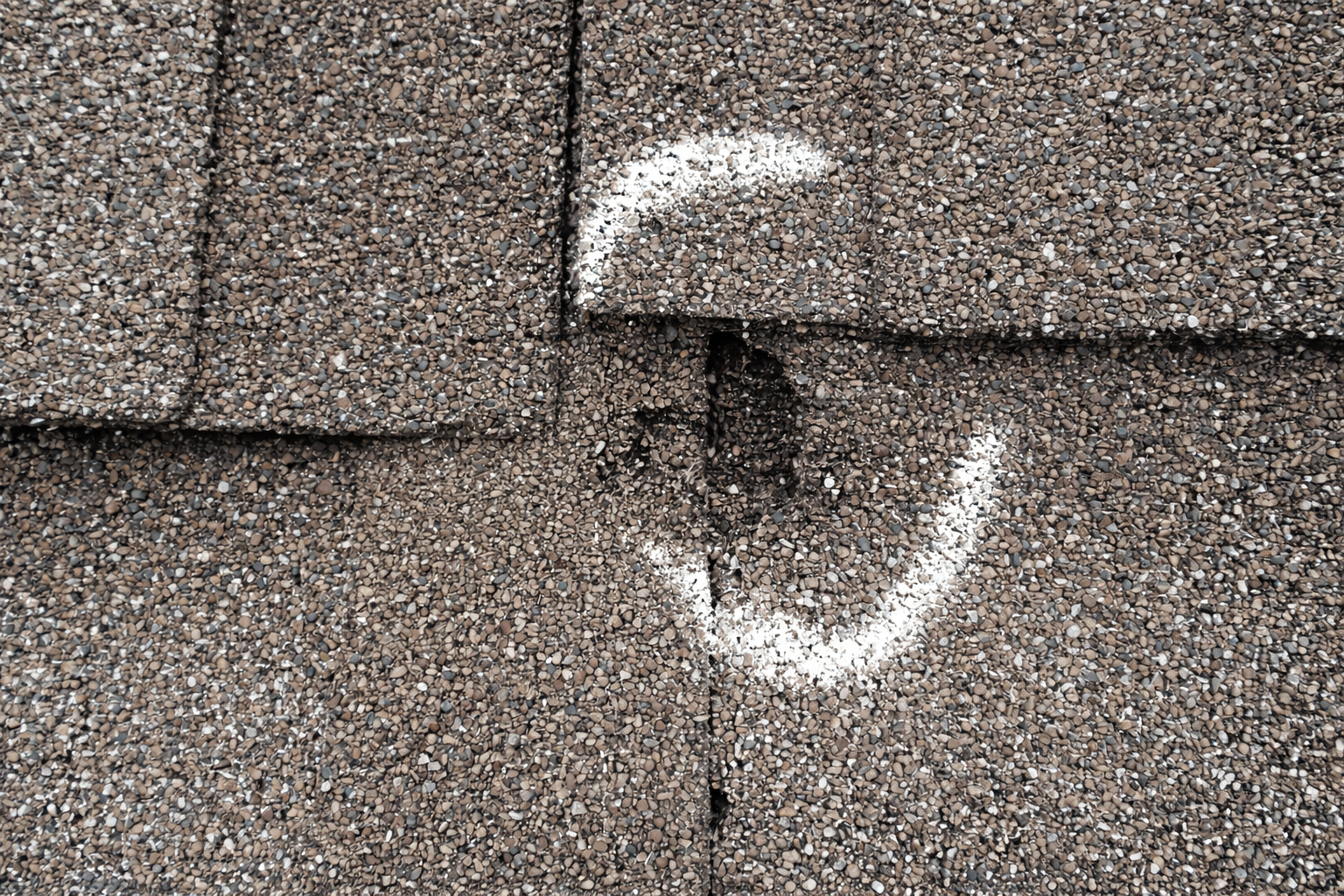
Dark spots where granules have been knocked loose. When hail strikes hard enough, it blasts the protective granules off the shingle surface, revealing the black asphalt mat underneath. These dark, exposed patches are distinctly different from the gradual, uniform fading caused by UV exposure over time.
Cracked or fractured shingles. Large hail can split shingles on impact. These cracks typically have sharp, clean edges and sometimes a circular or crescent pattern around the strike point — very different from the long, straight cracks caused by years of thermal expansion and contraction.
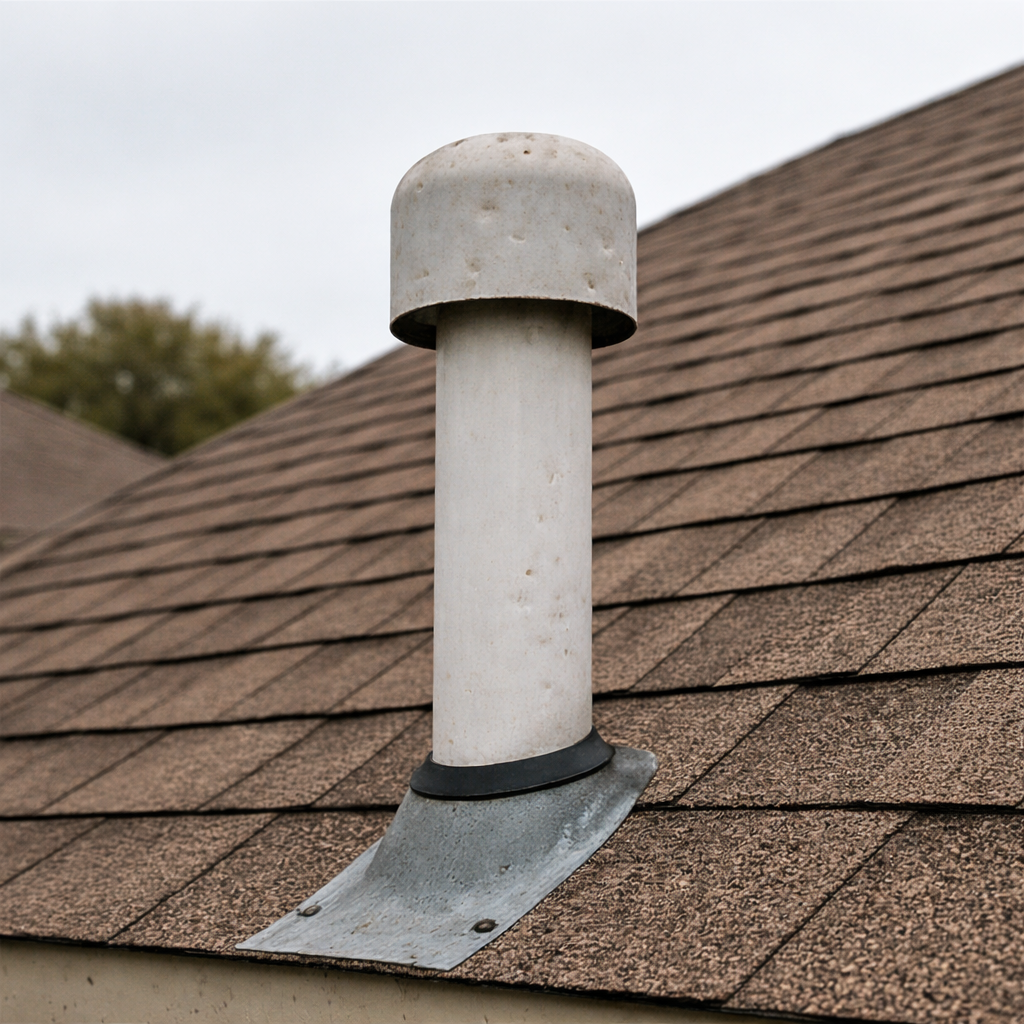
Dented gutters, vents, and flashing. Don't just look at the shingles. Metal components like roof vents, flashing around chimneys, and aluminum gutters are your best "hail witnesses." They hold dent evidence that's nearly impossible to explain away as natural aging.
Run your hand across a suspected hail strike on an asphalt shingle. If the spot feels soft, spongy, or like it gives slightly under your thumb — that's a hail bruise. Natural granule loss from aging will feel rough or gritty, but the shingle underneath stays firm. Adjusters use this exact test, and you should too when documenting damage for your claim.
What Normal Wear and Tear Looks Like
Every roof ages. Ogden's combination of intense summer UV exposure, heavy winter snow loads, and freeze-thaw cycles means your shingles are under constant stress — even without a single hailstone ever touching them. Here's what normal aging looks like so you don't confuse it with storm damage.
Uniform granule loss and fading. Over 15-20 years, the protective granules on asphalt shingles gradually erode. You'll notice this as a general lightening or fading across large sections of the roof — especially on south-facing slopes that take the brunt of Ogden's afternoon sun. You might also find granules accumulating in your gutters after routine rainstorms. This is normal.
Curling and cupping at the edges. As shingles dry out and lose flexibility, the edges start to curl upward (cupping) or the middle buckles up (clawing). This happens gradually across the entire roof surface — not in random, isolated spots like hail damage.
Cracking in straight, uniform lines. Thermal cycling — years of expanding in heat and contracting in cold — creates long, even cracks along the shingle surface. These are distinctly different from the sharp, circular fractures caused by hail impact.
Algae or moss growth. Dark streaks or green patches, especially on north-facing slopes or shaded areas, are caused by algae or moss — not storm damage. This is a cosmetic issue in Ogden that has nothing to do with hail.
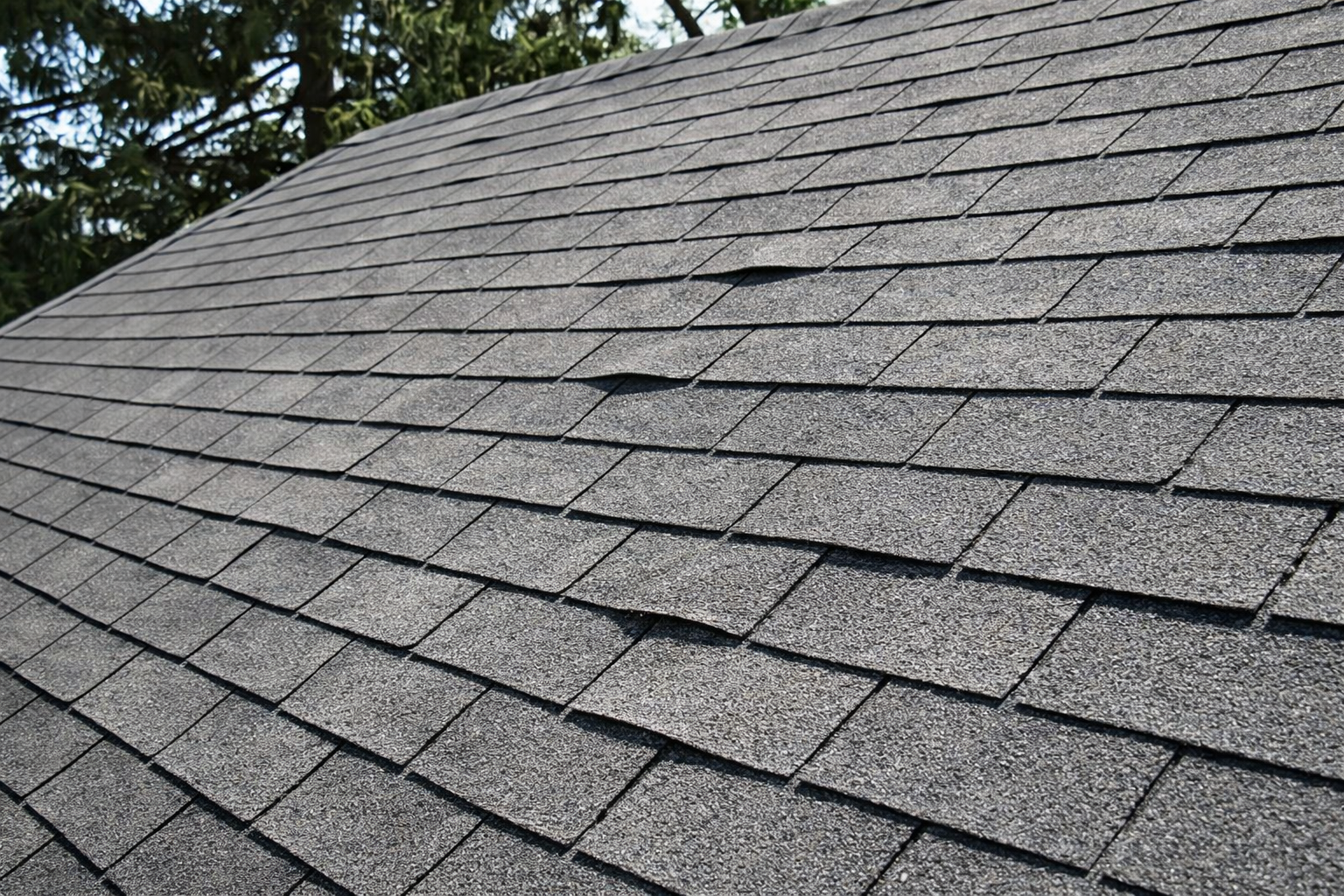
Wear is uniform. Hail is random. This is the single most important distinction. If the damage looks consistent across the roof — similar fading, similar curling, similar granule loss everywhere — that's aging. If you see scattered dark spots, random dents, and isolated fractures with no pattern? That's hail. Adjusters look at distribution pattern before anything else.
Side-by-Side Comparison: Hail Damage vs. Aging
Use this comparison to evaluate your own roof — or to prepare for a conversation with your insurance adjuster.
Signs of Storm Impact
- Random, scattered dent pattern
- Circular or teardrop dark spots
- Soft, spongy "bruises" on shingles
- Sharp-edged cracks and fractures
- Dents on metal vents, gutters, flashing
- Appears suddenly after a storm event
- Neighbors reporting similar damage
Signs of Aging
- Uniform, consistent pattern across roof
- Gradual fading and color loss
- Shingles feel firm, rough, or brittle
- Straight, even thermal cracks
- Curling, cupping, or clawing edges
- Develops gradually over years
- Algae, moss, or lichen growth
| Feature | Hail Damage | Normal Wear |
|---|---|---|
| Pattern | Random, scattered | Uniform, consistent |
| Granule Loss | Circular exposed patches | Gradual, widespread fading |
| Touch Test | Soft, spongy, gives under pressure | Firm, rough, or brittle |
| Cracking Style | Sharp, circular, or crescent | Straight, linear from thermal cycling |
| Metal Components | Dented vents, gutters, flashing | Rusted, but no dent marks |
| Onset | Sudden — after a storm | Gradual — over months and years |
| Insurance Coverage | ✅ Typically covered | ❌ Not covered |
Ogden's Hail Season & Why Your Roof Is at Risk
Utah is no stranger to severe hail. In August 2024, one of the most destructive hailstorms in recent Utah history swept through the Wasatch Front, bringing golf-ball-sized hail and damaging tens of thousands of properties across multiple counties. While that particular storm hit Utah County hardest, Ogden and Weber County regularly experience their own hail events from May through September.
Several factors make Ogden roofs particularly vulnerable:
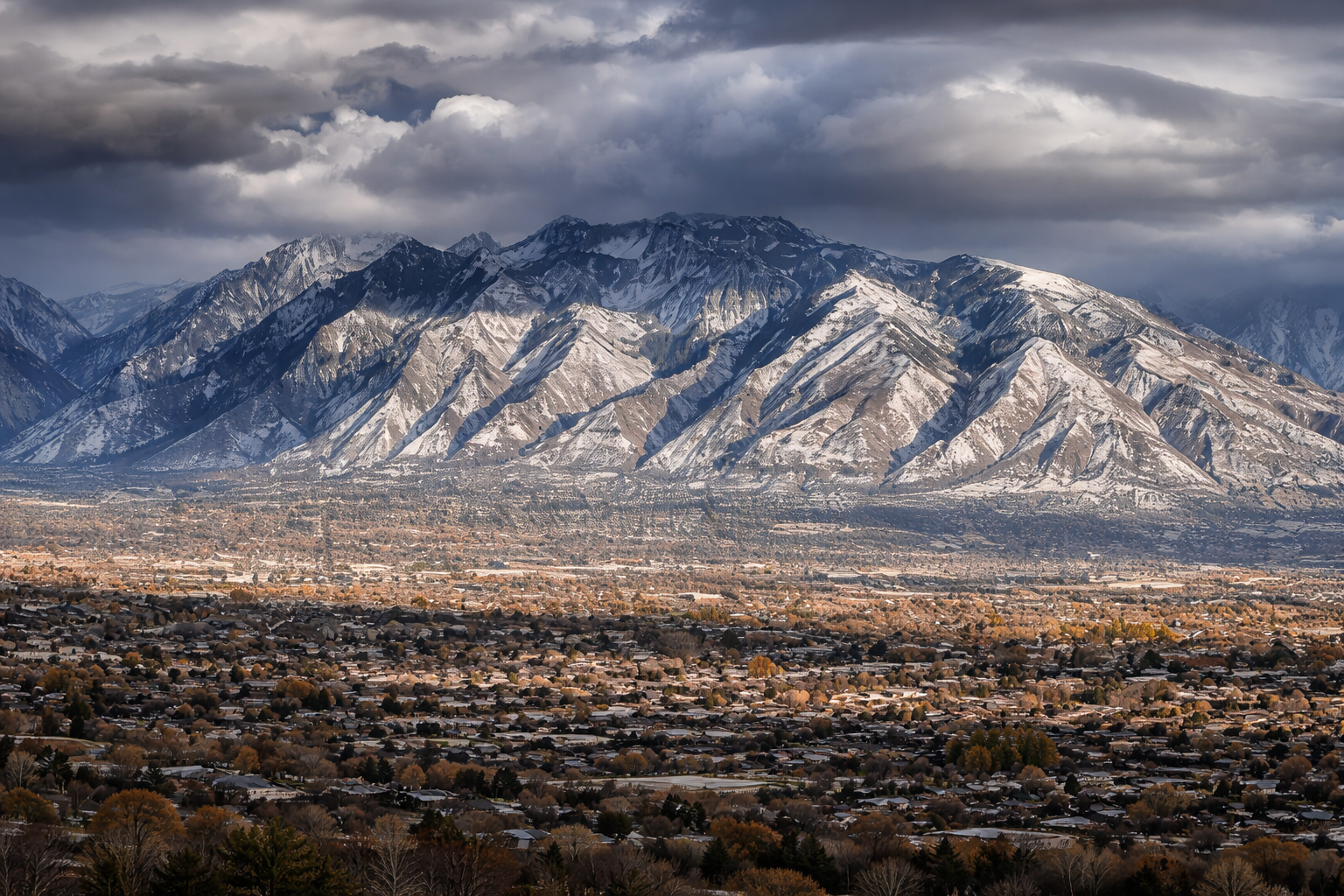
Wasatch Front storm funneling. The mountains along the east side of the valley channel storms through the corridor, often concentrating hail and high winds through Ogden, South Ogden, and Roy. Storms that form over the Great Salt Lake pick up moisture and intensity before hitting residential neighborhoods.
Extreme temperature swings. Ogden's climate cycles between sub-zero winter nights and 100°F+ summer days. This constant thermal expansion and contraction makes shingles more brittle over time — meaning when hail does hit, the damage is often worse on older roofs because the shingles have less flex.
Heavy snow loads compound the issue. Winter snow piling on your roof doesn't just stress the structure — it can mask hail damage from a fall storm. By the time the snow melts in spring, the damage has been sitting underneath for months, potentially worsening.
Most Utah homeowner's insurance policies require you to file a hail damage claim within one year of the storm event. If you wait too long, the insurer may deny your claim — even if the damage is clearly from hail. After any significant storm in Ogden, get your roof inspected within the first few weeks to protect your claim window.
Insurance Claims: Why This Distinction Matters Most
Here's the bottom line: insurance companies pay for storm damage but not for natural aging. And the adjuster who shows up at your Ogden home is trained to determine which one caused your roof's condition. If your roof shows a mix of both — which is common — the adjuster must separate what's claimable from what isn't.
This is where many Ogden homeowners lose money. Without a qualified roofing contractor who understands the difference and can advocate on your behalf during the inspection, it's easy for legitimate hail damage to be written off as "pre-existing wear and tear."
How to Protect Your Claim
Get a professional roof inspection before the adjuster visits. A licensed roofing contractor who specializes in insurance claims can document the hail damage with photographs, measurements, and a detailed written report. This gives you evidence to present — or dispute — the adjuster's findings.
Document everything with photos and dates. The moment you suspect hail damage, take photos from the ground and — if safe — up close. Note the date and cross-reference it with weather reports. If your neighbors are filing claims for the same storm, that strengthens your case significantly.
Don't wait. Utah's statute of limitations for insurance claims means delays can cost you your entire claim. Act within the first few weeks after a storm event.

Your Post-Storm Inspection Checklist
After a hailstorm hits Ogden, use this checklist to assess your property before calling a contractor:
- ☐ Check the ground: Look for hailstones, broken branch debris, or shingle granules scattered in your yard or driveway
- ☐ Inspect gutters and downspouts: Look for dents, dings, and accumulation of granules (more than normal)
- ☐ Examine siding and window frames: Dents or cracks on siding, broken screens, or chipped paint indicate the hail was severe enough to damage your roof too
- ☐ Look at outdoor AC units and vents: Dented metal fins on your HVAC condenser are a strong indicator of hail size and intensity
- ☐ Photograph everything: Take wide-angle and close-up photos with your phone's timestamp enabled
- ☐ Check your car: Dents on your vehicle confirm hail hit your property
- ☐ Ask your neighbors: If they're seeing damage, your roof likely took the same beating
- ☐ Call a licensed roofing contractor: Get a professional inspection before contacting your insurance company
Important: Never climb onto your roof to inspect it yourself, especially after a storm when shingles may be loose, wet, or structurally compromised. Leave the roof inspection to a licensed professional with safety equipment and experience. You can gather plenty of valuable evidence from the ground.
Frequently Asked Questions
Think Your Ogden Roof Has Hail Damage?
Don't wait for the next storm to make it worse. Our licensed inspectors will document the damage, explain your options, and walk you through the insurance claims process — at no cost to you.
Licensed & Insured in Utah • Insurance Claims Specialists • Serving Ogden, South Ogden, Roy, Layton & Weber County